Straw, Wicker and Raffia
Straw, wicker and raffia: a sourcing vocabulary
In woven bag sourcing these terms are often used interchangeably, but they refer to different things. A clear vocabulary helps wholesale buyers specify materials, set quality expectations, and brief suppliers accurately.
Raffia origin and character
Industry reference data describes raffia as coming from the underside fibers of young Raphia farinifera palm leaves, mainly from Madagascar. The strips are sun-dried and graded. The result is soft, ribbon-like, and highly flexible, which suits complex crochet work.
Raffia has a strong eco-farming story and is fully biodegradable. Those points make it useful for fashion brands and gift companies that want a natural material narrative.
Straw is an umbrella term
Straw is not one material. In fashion bags, the term commonly covers wheat straw, paper straw, seagrass, and rush. Paper straw is an engineered paper-pulp material, while wheat straw, seagrass, and rush are plant-based materials with different textures and workability.
Wicker is a technique, not a material
Wicker names a weaving technique. Wicker pieces can be woven from rattan, willow, bamboo, or grasses. This is why the phrase wicker bag is not a material specification. Wholesale buyers who need a consistent fiber story should name the fiber, whether that is rattan, willow, bamboo, or a grass.
For a deeper comparison, see our guide to rattan, wicker, and straw.
Three raffia grades
- Natural raffia: top tier, plant-based, soft and flexible.
- Regenerated raffia: wood-pulp and cotton blend, more uniform in supply.
- Synthetic raffia: plastic-based, not suited to high-end bags.
Natural raffia is the top tier because it is plant-based and biodegradable. Synthetic raffia looks similar but carries a different value story.
Durability, moisture, and lifespan reference ranges
The figures below are industry reference ranges, not Camytonc guarantees. They help buyers compare common woven materials.
| Material | Typical lifespan | Moisture resistance | Return-rate reference |
|---|---|---|---|
| Natural raffia | 3-5 years | Medium | 2-4% |
| Paper straw | 1-2 years | Coated: medium-high | Uncoated: 8-12% in humid climates |
| Natural straw | Most fragile | Poor | Not specified |
Moisture resistance matters most in humid shipping and storage conditions. Uncoated paper straw shows higher return-rate risk in those climates.
Crochet labor and production benchmarks
Crochet raffia production commonly takes about 8-15 labor-hours per bag as an industry reference range. Industry MOQs commonly start around 300-500 pcs for crochet raffia. Paper straw programs commonly sit at 500-2,000+ pcs. Sample cycles often run 3-7 days, with bulk production around 45-60 days.
For ready-to-order straw bags and efficient wholesale options, browse our wholesale straw bags range.
How Camytonc fits into straw and rattan sourcing
Camytonc is a bag brand developed by Wingtu. Since 2013, the company has supported woven bag sourcing from Yiwu, Zhejiang, China. For straw and rattan woven bags, the Camytonc MOQ is 300 pcs. That sits near the lower end of the common crochet raffia range of 300-500 pcs.
The factory is BSCI-certified and operates 50+ automated production lines, while 100+ designers support material and style development. Paid samples run in 1-10 days, which helps buyers evaluate fiber, weave, and finishing before bulk commitment.
For buyers evaluating natural materials, the practical question is not only look and price. Moisture risk, production time, and the difference between a true natural fiber and a paper or synthetic substitute shape how a program performs in the market.
Styles in this material
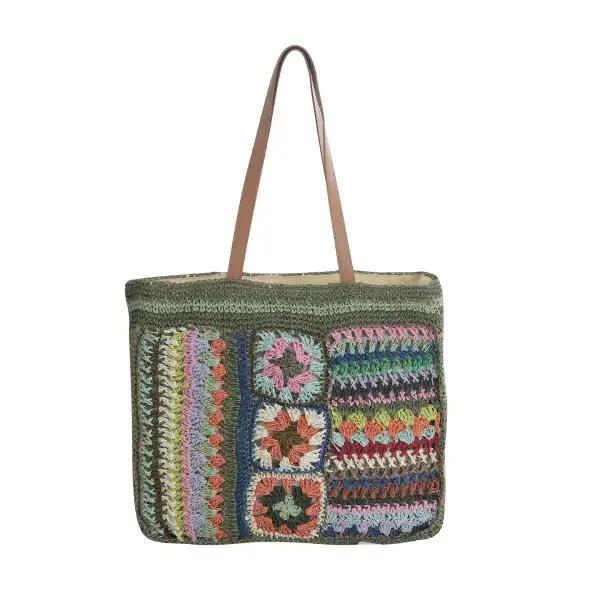
Straw-Woven and Crocheted Contrast-Color Shoulder Bag
Hand-crocheted straw shoulder bag with contrast-color granny-square panels and leather-tone straps.
HB-4815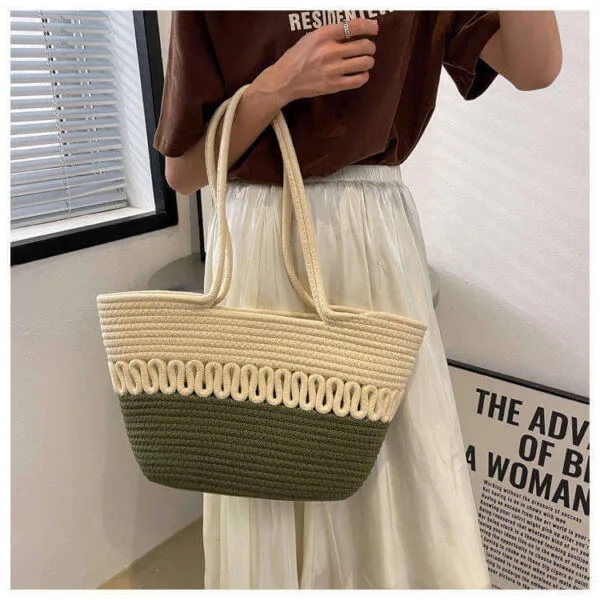
Hand-Woven Cotton Rope Tote Bag
Basket-style tote hand-woven from cotton rope, two-tone body with looped trim, colors made to order.
HB-6108Discuss straw, wicker and raffia for your line
We answer material questions before you commit to sampling. Replies within 24 hours.
Request a Quote